The Third Sunday in Advent
Augustine on Psalm LII
Advent Three Home
LORD, we beseech thee, give
ear to our prayers, and by thy gracious visitation lighten the
darkness of our heart, by our Lord Jesus Christ. Amen
ALMIGHTY God, give us grace that we may cast away the works of
darkness, and put upon us the armour of light, now in the time of
this mortal life, in which thy Son Jesus Christ came to visit us in
great humility; that in the last day, when he shall come again in
his glorious majesty to judge both the quick and the dead, we may
rise to the life immortal, through him who liveth and reigneth with
thee and the Holy Ghost, now and ever. Amen.
Source: 1549 Prayer Book. This collect is from the Middle Ages.
Isaiah 35, Psalms 52, 53 | 93, 94 , 1 Corinthians iv. 1 & St. Matthew xi. 2
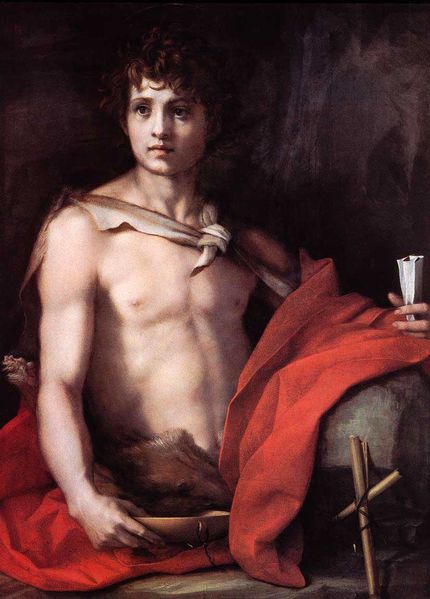
Isaiah 35
The wilderness and the solitary place shall be glad for them; and the desert shall rejoice, and blossom as the rose. It shall blossom abundantly, and rejoice even with joy and singing: the glory of Lebanon shall be given unto it, the excellency of Carmel and Sharon, they shall see the glory of the LORD, and the excellency of our God. Strengthen ye the weak hands, and confirm the feeble knees. Say to them that are of a fearful heart, Be strong, fear not: behold, your God will come with vengeance, even God with a recompence; he will come and save you. Then the eyes of the blind shall be opened, and the ears of the deaf shall be unstopped. Then shall the lame man leap as an hart, and the tongue of the dumb sing: for in the wilderness shall waters break out, and streams in the desert. And the parched ground shall become a pool, and the thirsty land springs of water: in the habitation of dragons, where each lay, shall be grass with reeds and rushes. And an highway shall be there, and a way, and it shall be called The way of holiness; the unclean shall not pass over it; but it shall be for those: the wayfaring men, though fools, shall not err therein. No lion shall be there, nor any ravenous beast shall go up thereon, it shall not be found there; but the redeemed shall walk there: And the ransomed of the LORD shall return, and come to Zion with songs and everlasting joy upon their heads: they shall obtain joy and gladness, and sorrow and sighing shall flee away.Psalm for Morning and Evening 52,53 | 93, 94
1 Corinthians iv. 1
LET a man so account of us, as of the ministers of Christ, and
stewards of the mysteries of God. Moreover it is required in
stewards, that a man be found faithful. But with me it is a very
small thing that I should be judged of you, or of man's judgment:
yea, I judge not mine own self. For I know nothing against myself;
yet am I not hereby justified: but he that judgeth me is the Lord.
Therefore judge nothing before the time, until the Lord come, who
both will bring to light the hidden things of darkness, and will
make manifest the counsels of the hearts: and then shall every man
have praise of God.
St. Matthew xi. 2
NOW when John had heard in the prison the works of Christ, he sent
two of his disciples, and said unto him, Art thou he that should
come, or do we look for another? Jesus answered and said unto them,
Go and shew John again those things which ye do hear and see: the
blind receive their sight, and the lame walk, the lepers are
cleansed, and the deaf hear, the dead are raised up, and the poor
have the gospel preached to them. And blessed is he, whosoever
shall not be offended in me. And as they departed, Jesus began to
say unto the multitudes concerning John, What went ye out into the
wilderness to see? A reed shaken with the wind? But what went ye
out for to see? A man clothed in soft raiment? behold, they that
wear soft clothing are in kings' houses. But what went ye out for
to see? A prophet? yea, I say unto you, and more than a prophet.
For this is he, of whom it is written, Behold, I send my messenger
before thy face, which shall prepare thy way before
thee.
Scripture from 1928 Book of Common Praye
The Collects of Thomas Cranmer
Augustine
Psalm LII
1. The title of the Psalm hath:
“At the end, understanding of David, when there came Doeg the
Edomite and told Saul, David hath come into the house of
Abimelech:” whereas we read that he had come into the house
of Achimelech. And it may chance that we do not unreasonably
suppose, that because of the similarity of a name and the
difference of one syllable, or rather of one letter, the titles
have been varied. In the manuscripts, however, of the Psalms, when
we looked into them, rather Abimelech we have found than
Achimelech. And since in another place thou hast a most evident
Psalm, intimating not a dissimilarity of name, but an utterly
different name; when, for instance, David changed his face before
King Achish, not before king Abimelech, and he sent him away, and
he departed: and yet the title of the Psalm is thus written,
“When he changed his countenance in the presence of
Abimelech” —the very change of name maketh us the
rather intent upon a mystery, lest thou shouldest pursue the
quasi-facts of history, and despise the sacred
veilings.…
2. Observe ye two kinds of men; the one of men labouring, the
other of those among whom they labour: the one of men thinking of
earth, the other of heaven: the one of men weighing down their
heart unto the deep, the other of men with Angels their heart
conjoining: the one trusting in earthly things, wherein this world
aboundeth, the other confiding in heavenly things, which God, who
lieth not, hath promised. But mingled are these kinds of men. We
see now the citizen of Jerusalem, citizen of the kingdom of heaven,
have some office upon earth: to wit, one weareth purple, is a
Magistrate, is Ædile, is Proconsul, is Emperor, doth direct
the earthly republic: but he hath his heart above, if he is a
Christian, if he is a believer, if he is godly, if he is despising
those things wherein he is, and trusteth in that wherein he is not
yet. Of which kind was that holy woman Esther, who, though she was
wife of a king, incurred the danger of interceding for her
countrymen: and when she was praying before God, where she could
not lie, in her prayer said, that her royal ornaments were to her
but as the cloth of a menstruous woman. Despair we not then of the
citizens of the kingdom of heaven, when we see them engaged in any
of Babylon’s matters, doing something earthly in republic
earthly: nor again let us forthwith congratulate all men that we
see doing matters heavenly; because even the sons of pestilence sit
sometimes in the seat of Moses, of whom is said, “What things
they say, do ye: but what things they do, do not: for they say, and
do not.” Those, amid earthly things, lift up heart unto
heaven, these, amid heavenly words, trail heart upon earth. But
there will come time of winnowing, when both are to be severed with
greatest diligence, in order that no grain may pass over unto the
heap of chaff that is to be burned, that not one single straw may
pass over to the mass that is to be stored in the barn. So long as
then now it is mingled, hear we thence our voice, that is, voice of
the citizens of the kingdom of heaven (for to this we ought to
aspire, to bear with evil men here, rather than be borne with by
good men): and let us conjoin ourselves to this voice, both with
ear and with tongue, and with heart and work. Which if we shall
have done, we are here speaking in those things which we hear. Let
us therefore speak first of the evil body of kingdom earthly.
3. “Why doth he glory in malice that is mighty?” (ver.
1). Observe, my brethren, the glorying of malignity, the glorying
of evil men. Where is glorying? “Why doth he glory in malice
that is mighty?” That is, he that in malice is mighty, why
doth he glory? There is need that a man be mighty, but in goodness,
not in malice. Is it any great thing to glory in malice? To build a
house doth belong to few men, any ignorant man you please can pull
down. To sow wheat, to dress the crop, to wait until it ripen, and
in that fruit on which one has laboured to rejoice, doth belong to
few men: with one spark any man you please can burn all the crop.
To breed an infant, when born to feed him, to educate, to bring him
on to youth’s estate, is a great task: to kill him in one
moment of time any one you please is able. Therefore those things
which are done for destruction, are most easily done. “He
that glorieth, let him glory in the Lord:” he that glorieth,
let him glory in goodness. Thou gloriest, because thou art mighty
in evil. What art thou about to do, O mighty man, what art thou
about to do, boasting thyself much? Thou art about to kill a man:
this thing also a scorpion, this also one fever, this also a
poisonous fungus can do. To this is thy mightiness reduced, that it
be made equal to a poisonous fungus? This therefore do the good
citizens of Jerusalem, who not in malice but in goodness glory:
firstly, that not in themselves, but in the Lord they glory.
Secondly, that those things which make for edification they
earnestly do, and do such things as are strong to abide: but things
which make for destruction they may do, for the discipline of men
advancing, not for the oppression of the innocent. To this
mightiness then that earthly body being compared, why may it not
hear out of these words, “Why doth he glory in malice that is
mighty?”
4. “In iniquity the whole day upon injustice hath thy tongue
thought” (ver. 2): that is, in the whole of time, without
weariness, without intermission, without cessation. And when thou
doest not, thou thinkest; so that when anything of evil is away
from thy hands, from thy heart it is not away; either thou doest an
evil thing, or while thou canst not do, thou sayest an evil thing,
that is, thou evil-speakest: or when not even this thou canst do,
thou willest and thinkest an evil thing. “The whole
day,” then, that is, without intermission. We expect
punishment to this man. Is he to himself a small punishment? Thou
threatenest him: thou, when thou threatenest him, wilt send him
whither? Unto evil? Send him away unto himself. In order that thou
mayest vent much rage, thou art going to give him into the power of
beasts: unto himself he is worse than beasts. For a beast can
mangle his body: of himself he cannot leave his heart whole.
Within, against himself he doth rage of himself, and dost thou from
without seek for stripes? Nay, pray God for him, that he may be set
free from himself. Nevertheless in this Psalm, my brethren, there
is not a prayer for evil men, or against evil men, but a prophecy
of what is to result to evil men. Think not therefore that the
Psalm of ill-will saith anything: for it is said in the spirit of
prophecy.
5. There followeth then what? All thy might and all thy thought of
iniquity all the day, and meditation of malignity in thy tongue
without intermission, hath performed what, done what? “As
with a sharp razor thou hast done deceit” (ver. 3). See what
do evil men to Saints, they scrape their hair. What is it that I
have said? If there be such citizens of Jerusalem, that hear the
voice of their Lord, of their King, saying, “Fear not them
which kill the body, but are not able to kill the soul:” that
hear the voice which but now from the Gospel hath been read,
“What doth it profit a man, if he shall gain the whole world,
and of himself make wreck:” they despise all present good
things, and above all life itself. And what is Doeg’s razor
to do to a man on this earth meditating on the kingdom of heaven,
and about to be in the kingdom of heaven, having with him God, and
about to abide with God? What is that razor to do? Hair it is to
scrape, it is to make a man bald. And this belongeth to Christ, who
in the Place of a Skull was crucified. It maketh also the son of
Core, which is interpreted baldness. For this hair signifieth a
superfluity of things temporal. Which hairs indeed are not made by
God superfluously on the body of men, but for a sort of ornament:
yet because without feeling they are cut off, they that cleave to
the Lord with their heart, so have these earthly things as they
have hair. But sometimes even something of good with
“hair” is wrought, when thou breakest bread to the
hungry, the poor without roof thou bringest into thy house; if thou
shalt have seen one naked, thou coverest him: lastly, the Martyrs
themselves also imitating the Lord, blood for the Church shedding,
hearing that voice, “As Christ laid down His life for us, so
also ought we also to lay down for the brethren,” in a
certain way with their hair did good to us, that is, with those
things which that razor can lop off or scrape. But that therefore
even with the very hair some good can be done, even that woman a
sinner intimated, who, when she had wept over the feet of the Lord,
with her hair wiped what with tears she wetted. Signifying what?
That when thou shalt have pitied any one, thou oughtest to relieve
him also if thou canst. For when thou hast pity, thou sheddest as
it were tears: when thou relievest, thou wipest with hair. And if
this to any one, how much more to the feet of the Lord. The feet of
the Lord are what? The holy Evangelists, whereof is said,
“How beautiful are the feet of them that tell of peace, that
tell of good things!” Therefore like a razor let Doeg whet
his tongue, let him whet deceit as much as he may: he will take
away superfluous temporal things; will he necessary things
everlasting?
6. “Thou hast loved malice above benignity” (ver. 4).
Before thee was benignity; herself thou shouldest have loved. For
thou wast not going to expend anything, nor wast thou going to
fetch something to love by a distant voyage. Benignity is before
thee, iniquity before thee: compare and choose. But perchance thou
hast an eye wherewith thou seest malignity, and hast no eye
wherewith thou seest benignity. Woe to the iniquitous heart. What
is worse, it doth turn away itself, that it may not see what it is
able to see. For what of such hath been said in another place?
“He would not understand that he might do good.” For it
is not said, he could not: but “he would not,” he
saith, “understand that he might do good,” he closed
his eyes from present light. And what followeth? “Of iniquity
he hath meditated in his bed;” that is, in the inner secrecy
of his heart. Some reproach of this kind is heaped upon this Doeg
the Edomite, a malignant body, a motion of earth, not abiding, not
heavenly. “Thou hast loved malignity above benignity.”
For wilt thou know how an evil man doth see both, and the former he
doth rather choose, from the other doth turn himself away?
Wherefore doth he cry out when he suffereth anything unjustly?
Wherefore doth he then exaggerate as much as he can the iniquity,
and praise benignity, censuring him that hath wrought in him
malignity above benignity? Be he then a rule to himself for seeing:
out of himself he shall be judged. Moreover, if he do what is
written, “Thou shalt love thy neighbour as thyself;”
and, “Whatsoever good things ye will that men should do unto
you, these also do ye do unto them:” at home he hath means of
knowing, because what on himself he will not have to be done, he
ought not to do to another. “Thou hast loved malice above
benignity.” Iniquitously, inordinately, perversely thou
wouldest raise water above oil: the water will be sunk, the oil
will remain above. Thou wouldest under darkness place a light: the
darkness will be put to flight, the light will remain. Above heaven
thou wouldest place earth, by its weight the earth will fall into
its place. Thou therefore wilt be sunk by loving malice above
benignity. For never will malice overcome benignity. “Thou
hast loved malice above benignity: iniquity more than to speak of
equity.” Before thee is equity, before thee is iniquity: one
tongue thou hast, whither thou wilt thou turnest it: wherefore then
rather to iniquity and not to equity? Food of bitterness dost thou
not give to thy belly, and food of iniquity dost thou give to thy
malignant tongue? As thou choosest whereon to live, so choose what
thou mayest speak. Thou preferrest iniquity to equity, and
preferrest malice to benignity; thou indeed preferrest, but above
what can ever be but benignity and equity? But thou, by placing
thyself in a manner upon those things which it is necessary should
go beneath, wilt not make them to be above good things, but thou
with them wilt be sunk unto evil things.
7. Because of this there followeth in the Psalm, “Thou hast
loved all words of sinking under” (ver. 5). Rescue therefore
thyself, if thou canst, from sinking under. From shipwreck thou art
fleeing, and dost embrace lead! If thou wilt not sink, catch at a
plank, be borne on wood, let the Cross carry thee through. But now
because thou art a Doeg the Edomite, a “motion,” and
“of earth,” thou doest what? “Thou hast loved all
words of sinking-under, a tongue deceitful.” This hath
preceded, words of sinking-under have followed a tongue deceitful.
What is a tongue deceitful? A minister of guile is a tongue
deceitful, of men bearing one thing in heart, another thing from
mouth bringing forth. But in these is overthrowing, in these
sinking under.
8. “Wherefore God shall destroy thee at the end” (ver.
6): though now thou seemest to flourish like grass in the field
before the heat of the sun. For, “All flesh is grass, and the
brightness of man as the bloom of grass: the grass hath withered,
and the bloom hath fallen down: but the word of the Lord abideth
for everlasting.” Behold that to which thou mayest bind
thyself, to what “abideth for everlasting.” For if to
grass, and to the bloom of grass, thou shalt have bound thyself,
since the grass shall wither, and the bloom shall fall down,
“God shall destroy thee at the end:” and if not now,
certainly at the end He shall destroy, when that winnowing shall
have come, and the heap of chaff from the solid grain shall have
been separated. Is not the solid grain for the barns, and the chaff
for the fire? Shall not the whole of that Doeg stand at the left
hand, when the Lord is to say, “Go ye into fire everlasting,
which hath been prepared for the devil and his angels”?
Therefore “God shall destroy at the end: shall pluck thee
out, and shall remove thee from thy dwelling.” Now then this
Doeg the Edomite is in a dwelling: “But a servant abideth not
in the house for ever.” Even he worketh something of good,
even if not with his doings, at least with the words of God, so
that in the Church, when he “seeketh his own,” he would
say, at least, those things which are of Christ. “But He
shall remove thee from thy dwelling.” “Verily, verily,
I say unto you, they have received their reward.” “And
thy root from the land of the living.” Therefore in the land
of the living we ought to have root. Be our root there. Out of
sight is the root: fruits may be seen, root cannot be seen. Our
root is our love, our fruits are our works: it is needful that thy
works proceed from love, then is thy root in the land of the
living. Then shall be rooted up that Doeg, nor any wise shall he be
able there to abide, because neither more deeply there hath he
fixed a root: but it shall be with him in like manner as it is with
those seeds on the rock, which even if a root they throw out, yet,
because moisture they have not, with the risen sun forthwith do
wither. But, on the other hand, they that fix a root more deeply,
hear from the Apostle what? “I bow my knees for you to the
Father of our Lord Jesus Christ, that ye may be in love rooted and
grounded.” And because there now is root, “That ye may
be able,” he saith, “to comprehend what is the height,
and breadth, and length, and depth: to know also the supereminent
knowledge of the love of Christ, that ye may be filled unto all the
fulness of God.” Of such fruits so great a root is worthy,
being so single, so budding, for buddings so deeply grounded. But
truly this man’s root shall be rooted up from the land of the
living.
9. “And the just shall see, and shall fear; and over him
they shall laugh” (ver. 7). Shall fear when? Shall laugh
when? Let us therefore understand, and make a distinction between
those two times of fearing and laughing, which have their several
uses. For so long as we are in this world, not yet must we laugh,
lest hereafter we mourn. We have read what is reserved at the end
for this Doeg, we have read and because we understand and believe,
we see but fear. This, therefore, hath been said, “The just
shall see, and shall fear.” So long as we see what will
result at the end to evil men, wherefore do we fear? Because the
Apostle hath said, “In fear and trembling work out your own
salvation:” because it hath been said in a Psalm,
“Serve the Lord in fear, and exult unto Him with
trembling.” Wherefore “with fear”?
“Wherefore let him that thinketh himself to stand, see that
he fall not.” Wherefore “with trembling”? Because
he saith in another place: “Brethren, if a man shall have
been overtaken in any delinquency, ye that are spiritual instruct
such sort in the spirit of gentleness; heeding thyself, lest thou
also be tempted.” Therefore, the just that are now, that live
of faith, so see this Doeg, what to him is to result, that
nevertheless they fear also for themselves: for what they are
to-day, they know; what to-morrow they are to be, they know not.
Now, therefore, “The just shall see, and they shall
fear.” But when shall they laugh? When iniquity shall have
passed over; when it shall have flown over; as now to a great
degree hath flown over the time uncertain; when shall have been put
to flight the darkness of this world, wherein now we walk not but
by the lamp of the Scriptures, and therefore fear as though in
night. For we walk by prophecy; whereof saith the Apostle Peter,
“We have a more sure prophetic word, to which giving heed ye
do well, as to a lamp shining in a dark place, until the day shine,
and the day-star arise in your hearts.” So long then as by a
lamp we walk, it is needful that with fear we should live. But when
shall have come our day, that is, the manifestation of Christ,
whereof the same Apostle saith, “When Christ shall have
appeared, your life, then ye also shall appear with Himself in
glory,” then the just shall laugh at that Doeg.…
10. But what shall they then say that shall laugh? “And over
him they shall laugh; and shall say, Behold a man that hath not set
God for his helper” (ver. 8). See ye the body earthly!
“As much as thou shalt have, so great shalt thou be,”
is a proverb of covetous men, of grasping men, of men oppressing
the innocent, of men seizing upon other men’s goods, of men
denying things entrusted to their care. Of what sort is this
proverb? “As much as thou shalt have, so great shalt thou
be;” that is, as much as thou shalt have had of money, as
much as thou shalt have gotten, by so much the more mighty shalt
thou be. “Behold a man that hath not set God for his helper,
but hath trusted in the multitude of his riches.” Let not a
poor man, one perchance that is evil, say, I am not of this body.
For he hath heard the Prophet saying, “He hath trusted in the
multitude of his riches:” forthwith if he is poor, he heedeth
his rags, he hath observed near him perchance a rich man among the
people of God more richly apparelled, and he saith in his heart, Of
this man he speaketh; doth he speak of me? Do not thence except
thyself, do not separate thyself, unless thou shalt have seen and
feared, in order that thou mayest hereafter laugh. For what doth it
profit thee, if thou dost want means, and thou burnest with
cupidity? When our Lord Jesus Christ to that rich man that was
grieved, and that was departing from Him, had said, “Go, sell
all that thou hast, and give to the poor, and thou shalt have
treasure in heaven, and come follow Me:” and great
hopelessness for rich men foretold, so that He said, more easily
could a camel pass through the eye of a needle, than a rich man
enter into the kingdom of Heaven, were not forthwith the disciples
grieved, saying with themselves, “Who shall be able to be
saved?” Therefore when they were saying, “Who shall be
able to be saved?” did they think of the few rich men, did
there escape them so great a multitude of poor men? Could they not
say to themselves, If it is hard, aye an impossible thing, that
rich men should enter into the kingdom of heaven, as it is
impossible that a camel should enter through the eye of a needle,
let all poor men enter into the kingdom of heaven, be the rich
alone shut out? For how few are the rich men? But of poor men are
thousands innumerable. For not the coats are we to look upon in the
kingdom of heaven; but for every one’s garment shall be
reckoned the effulgence of righteousness: there shall be therefore
poor men equal to Angels of God, clothed with the stoles of
immortality, they shall shine as the sun in the kingdom of their
Father: what reason is there for us about a few rich men to be
concerned, or distressed? This thought not the Apostles; but when
the Lord had spoken this, “It is easier for a camel to go
through the eye of a needle, than for a rich man to enter into the
kingdom of heaven:” they saying to themselves, “Who
shall be able to be saved,” meant what? Not means, but
desires; for they saw even poor men themselves, even if not having
money, yet to have covetousness. And that ye may know, that not
money in a rich man, but covetousness is condemned, attend to what
I say; Thou observest that rich man standing near thee, and
perchance in him is money, and is not covetousness; in thee is not
money, and is covetousness. A poor man full of sores, full of woe,
licked by dogs, having no help, having no morsel, not having
perchance a mere garment, was borne by the Angels unto
Abraham’s bosom. Ho! being a poor man, art thou glad now; for
are even sores by thee to be desired? Is not thy patrimony
soundness? There is not in this Lazarus the merit of poverty, but
that of godliness. For thou seest who was borne up, thou seest not
whither he was borne up. Who was borne up by Angels? A poor man,
full of woe, full of sores. Whither was he borne up? Unto
Abraham’s bosom. Read the Scriptures, and thou shall find
Abraham to have been a rich man. In order that thou mayest know,
that not riches are blamed; Abraham had much gold, silver, cattle,
household, was a rich man, and unto his bosom Lazarus, a poor man,
was borne up. Unto bosom of rich man, poor man: are not rather both
unto God rich men, both in cupidity poor men?…
11. Therefore that man having been condemned that “hath
trusted in the multitude of his riches, and hath prevailed in his
vanity:” for what more vain, than he that thinketh coin more
to avail than God? Therefore that man having been condemned that
said, blessed of the people to whom these things are: thou that
sayest, “Blessed the people of whom is the Lord their own
God,” dost think of thyself what? dost hope for thyself what?
“But I;” now at length hear that body: “But I am
like an olive, fruit-bearing in the house of God” (ver. 9).
Not one man speaketh, but that olive fruit-bearing, whence have
been pruned the proud branches, and the humble wild olive graffed
in. “Like an olive, fruit-bearing in the house of God, I have
trusted in the mercy of God.” He did what? “In the
multitude of his riches:” therefore his root shall be plucked
out from the land of the living. “But I,” because
“like an olive, fruit-bearing in the house of God,” the
root whereof is nourished, is not rooted out, “have trusted
in the mercy of God.” But perchance now? For even herein men
err sometimes. God indeed they worship, and are not now like to
that Doeg: but though on God they rely, it is for temporal things
nevertheless; so that they say to themselves, I worship my God, who
will make me rich upon earth, who to me will give sons, who to me
will give a wife. Such things indeed giveth none but God, but God
would not have Himself for the sake of such things to be loved. For
to this end oftentimes those things He giveth even to evil men, in
order that some other thing good men of Him may learn to seek. In
what manner then sayest thou, “I have trusted in the mercy of
God”? Perchance for obtaining temporal things? Nay but,
“For everlasting and world without end.” The
expression, “For everlasting,” he willed to repeat by
adding, “world without end,” in order that by there
repeating he might affirm how rooted he was in the love of the
kingdom of heaven, and in the hope of everlasting felicity.
12. “I will confess to Thee for ever, because Thou hast
done” (ver. 10). “Hast done what?” Doeg Thou hast
condemned, David Thou hast crowned. “I will confess to Thee
for ever, because Thou hast done.” Great confession,
“Because thou hast done”! “Hast done” what?
except these very things which above have been spoken of, that like
an olive fruit-bearing in the house of God, I should trust in the
mercy of God for everlasting and world without end? Thou hast done:
an ungodly man cannot justify himself. But who is He that
justifieth? “Believing,” he saith, “on Him”
that justifieth “the ungodly.” “For what hast
thou which thou hast not received? But if thou hast received, why
dost thou glory as if thou hast not received, as if of thyself thou
hast?” Be it far from me that I should so glory, saith he,
that is opposed against Doeg, that beareth with Doeg upon earth,
until he remove from his dwelling, and be rooted up from the land
of the living. I glory not as if I have not received, but in God I
glory. “And I will confess to Thee because Thou hast
done,” that is, because Thou hast done not according to my
merits, but according to Thy mercy. But I have done what? If thou
recollectest, “Before, I was a blasphemer, and a persecutor,
and injurious.” But thou, what hast thou done? “But
mercy I have obtained, because ignorant I did it.” “I
will confess to Thee for ever, because Thou hast done.”
13. “And I will look for Thy name, for it is
pleasant.” Bitter is the world, but Thy name is pleasant.
Even if certain sweet things are in the world, yet with bitterness
they are digested. Thy name is preferred, not only for greatness
but also for pleasantness. “For unjust men have told to me
their delights, but it is not as Thy law, O Lord.” For if
there were nothing sweet to the Martyrs, they would not have
suffered with equanimity so great bitterness of tribulations. Their
bitterness by any one was experienced, their sweetness easily could
no one taste. The name of God therefore is pleasant to men loving
God above all pleasantnesses. “I will look for Thy name, for
it is pleasant.” And to what dost Thou prove that it is
pleasant? Give me a palate to which it is pleasant. Praise honey as
much as thou art able, exaggerate the sweetness thereof with what
words thou shalt have the power: a man knowing not what honey is,
unless he shall have tasted, what thou sayest knoweth not.
Therefore the rather to the proof the Psalm inviting thee saith
what? “Taste and see that sweet is the Lord.” Taste
thou wilt not, and thou sayest, Is it pleasant? What is pleasant?
If thou hast tasted, in thy fruit be it found, not in words alone,
as it were only in leaves, lest by the curse of the Lord, to wither
like that fig-tree thou shouldest deserve. “Taste,” he
saith, “and see, that sweet is the Lord.” Taste and
see: then ye shall see, if ye shall have tasted. But to a man not
tasting, how provest thou? By praising the pleasantness of the name
of God, whatsoever things thou shalt have said are words: something
else is taste. The words of His praise there hear even the ungodly,
but none taste how sweet it is, but the Saints. Further, a man
discerning the sweetness of the name of God, and wishing to unfold
and wishing to show the same, and not finding persons to whom he
may unfold it; for to the Saints there is no need that he show it,
because they even of themselves taste and know, but the ungodly
cannot discern what they will not taste: doth, I say, what, because
of the sweetness of the name of God? He hath borne him forthwith
away from the crowds of the ungodly. “And I will look,”
he saith, “for Thy name, for it is pleasant, in the sight of
Thy Saints.” Pleasant is Thy name, but not in the sight of
the ungodly. I know how sweet a thing it is, but it is to them that
have tasted.
Let us pray in the words of Augustine.
Turn we to the Lord God, the Father Almighty, and with pure
hearts offer to him, so far as our meanness can, great and true
thanks, with all our hearts praying his exceeding kindness, that of
his good pleasure he would deign to hear our prayers, that by his
Power he would drive out the enemy from our deeds and thoughts,
that he would increase our faith, guide our understandings, give us
spiritual thoughts, and lead us to his bliss, through Jesus Christ
his Son our Lord, who liveth and reigneth with him, in the Unity of
the Holy Spirit, one God, for ever and ever. Amen.
[A prayer which he was wont to use after his
Sermons and Lectures.]
NPNF (V1-08) St. Augustine
Finis
HOME